 Image 1 of 1
How you move and position your body can make a meaningful difference during birth.
The right position at the right time can help relieve back pain and pressure, support your baby’s journey through the pelvis, and give you opportunities to rest and feel more comfortable along the way.
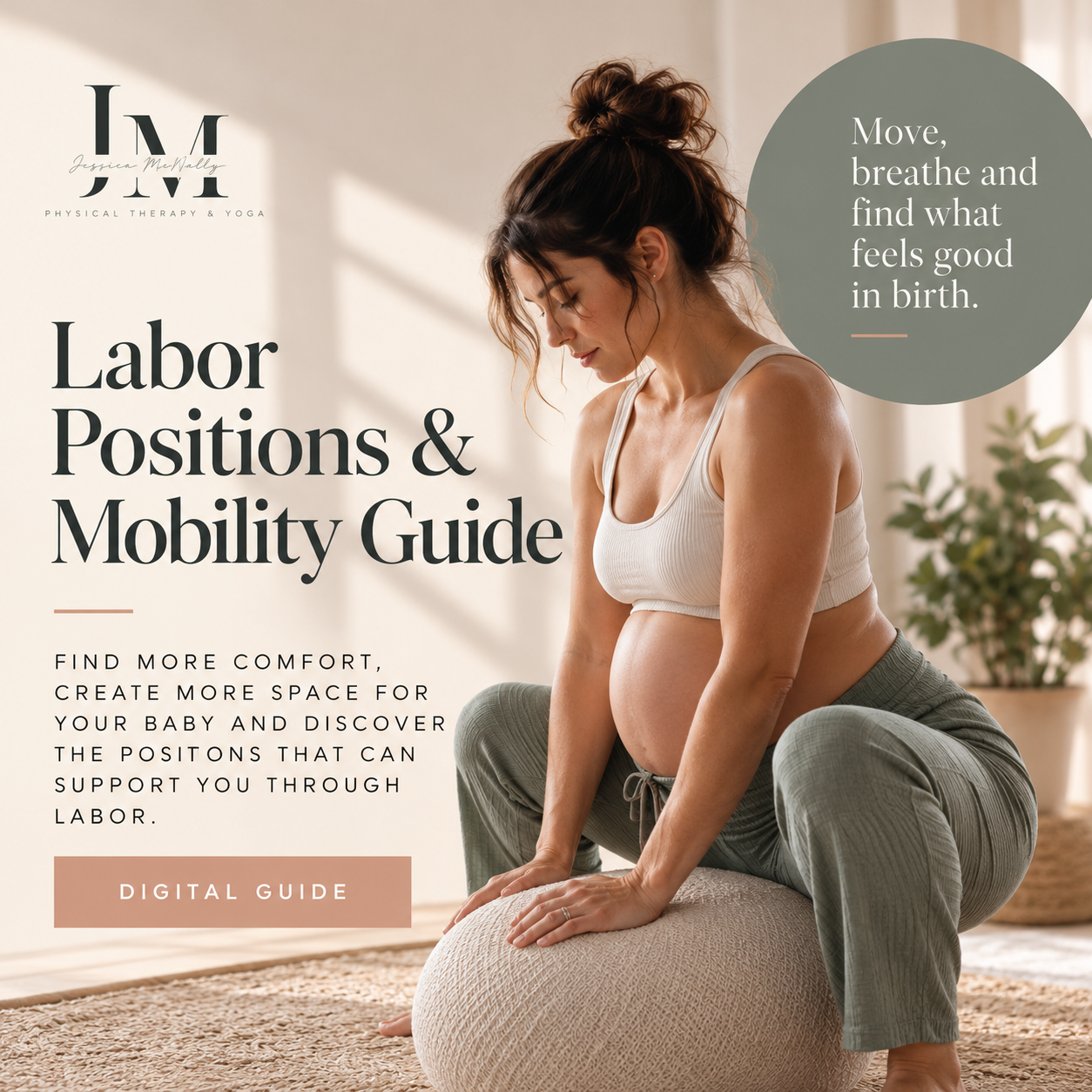
Created by pelvic floor physical therapist Dr. Jessica McNally, this guide gives you a range of positions to explore — so you can move, adjust and find what feels most supportive as your labor unfolds.
Inside, you’ll discover how to:
Ease back pain and pressure with positions designed to bring more comfort during contractions
Create more room for your baby to move by changing the space and shape of your pelvis
Support your baby’s descent with movement, upright positions and gravity
Find restful positions that still support your body and baby as labor progresses
Move between positions with purpose, understanding what each can offer at different points in labor
Bring your partner into the experience with supported positions, massage and movement you can do together
From walking and slow dancing to squatting, side-lying and hands-and-knees, you’ll have more ways to find what feels good and work with your body throughout birth.
This guide provides general educational information and isn’t a substitute for individualized medical or pelvic floor physical therapy advice.